
Talk to our team and get expert guidance for your surgical needs.
+91 88012 51947 Book a Consultation →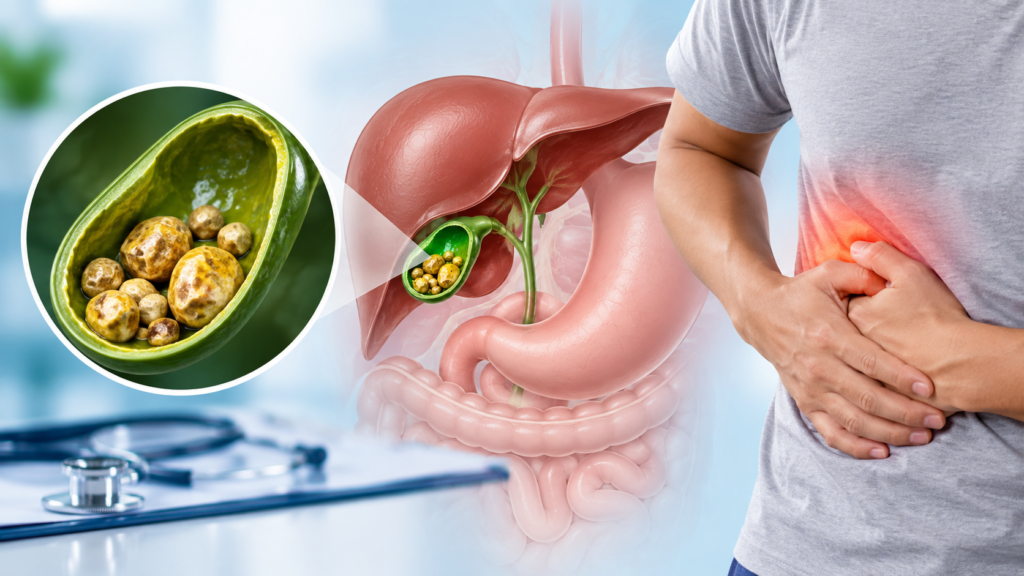
Gallstones usually form when there is an imbalance in the substances that make up bile. The most common type, known as cholesterol stones, can develop when bile contains excess cholesterol or when the gallbladder does not empty properly. Pigment stones, which are less common, may form when there is an increased amount of bilirubin in the bile. Several factors can increase the likelihood of developing gallstones, including obesity, rapid weight loss, a high-fat or calorie-rich diet, certain metabolic conditions, pregnancy, increasing age, and a family history of gallstones. Some medical conditions and medications may also contribute to their formation.
Many people with gallstones do not experience any symptoms, and the stones may be discovered incidentally during an ultrasound or other abdominal examination. When symptoms occur, the most characteristic complaint is sudden or persistent pain in the upper right or upper middle part of the abdomen. This pain may sometimes spread toward the back or right shoulder and can occur after a heavy or fatty meal. Patients may also experience nausea, vomiting, indigestion, bloating, or a feeling of fullness.
Symptoms that are severe, persistent, or associated with fever, chills, jaundice, or repeated vomiting may indicate a complication such as gallbladder inflammation or blockage of the bile duct. Such symptoms should not be ignored and require prompt medical assessment.
The diagnosis of gallstones begins with a detailed medical history and physical examination. An abdominal ultrasound is generally the first and most useful investigation for detecting gallstones and assessing the condition of the gallbladder. Depending on the patient’s symptoms and clinical findings, blood tests may be recommended to evaluate liver function, infection, or inflammation.
In selected cases, additional imaging such as magnetic resonance cholangiopancreatography (MRCP), CT scanning, or other specialized investigations may be advised to determine whether stones have entered the common bile duct or to evaluate suspected complications. The appropriate diagnostic approach is selected according to the patient’s symptoms and individual medical condition.
Treatment for gallstones depends on whether the stones are causing symptoms or complications. Gallstones that are discovered incidentally and are not producing symptoms may not always require immediate treatment, although medical advice and follow-up may be recommended depending on the circumstances. Dietary adjustments and medicines may help manage symptoms in selected patients, but they do not reliably eliminate established gallstones.
For symptomatic or complicated gallstones, the standard definitive treatment is removal of the gallbladder, known as cholecystectomy. Laparoscopic cholecystectomy is a minimally invasive key-hole surgical procedure performed through a few small incisions rather than a large abdominal incision. It is widely used because it can provide effective treatment with less postoperative discomfort, smaller scars, shorter hospital stays, and an earlier return to normal activities compared with traditional open surgery in suitable patients. Dr. Shashank evaluates each patient individually and recommends the safest and most appropriate surgical approach based on the condition of the gallbladder, the presence of complications, and the patient’s overall health.
When a gallstone has moved into the common bile duct, additional treatment may be required to clear the duct before or around the time of gallbladder surgery. The treatment plan is tailored according to the location of the stone and the patient’s clinical condition.
Recovery after laparoscopic gallbladder surgery is generally straightforward for most patients. Mild abdominal discomfort, temporary bloating, or shoulder-tip pain may occur during the initial recovery period and usually improves gradually. Patients are generally encouraged to begin gentle movement early and gradually return to their normal daily activities according to their surgeon’s advice.
A balanced diet and adequate hydration can support recovery. Some patients may temporarily find fatty or very heavy meals difficult to tolerate after surgery, so smaller, lighter meals may be preferable during the early recovery period. Keeping the surgical wounds clean and monitoring them for increasing redness, swelling, discharge, or worsening pain is also important. Follow-up with the treating surgeon helps ensure that recovery is progressing appropriately.
Gallstones can sometimes lead to serious complications if a stone blocks the normal drainage of bile. These complications may include acute cholecystitis, infection of the bile ducts, jaundice, pancreatitis, or recurrent biliary pain. Prompt treatment can help reduce the risk of these problems.
As with any surgical procedure, laparoscopic cholecystectomy carries potential risks, although significant complications are uncommon when the procedure is performed appropriately. Possible complications include bleeding, infection, injury to the bile duct or nearby organs, bile leakage, or complications related to anaesthesia. The risks can vary depending on the patient’s health and whether the gallbladder is inflamed or the condition is complicated. A detailed discussion with the surgeon before treatment helps patients understand the expected benefits and individual risks.
Patients experiencing repeated upper abdominal pain, particularly after meals, should seek medical evaluation rather than repeatedly managing the symptoms on their own. Medical attention is especially important when abdominal pain is severe or persistent, or when it is accompanied by fever, chills, vomiting, yellowing of the eyes or skin, dark urine, pale stools, or significant weakness.
Early assessment can help identify gallstones before they result in more serious complications. If you have been diagnosed with gallstones or are experiencing symptoms suggestive of gallbladder disease, consultation with a qualified laparoscopic and minimally invasive surgeon can help determine whether observation, further investigation, or surgical treatment is appropriate.
Mon - Sat : 9:00 AM - 6:00 PM Sunday : By Appointment Only
Expert Surgical Care
for a Healthier Tomorrow
Copyright © 2026 drshashanksurgeon.com
All Right Reserved
Powered by Prigmasoft Technologies
www.prigmasoft.world
WhatsApp us