
Talk to our team and get expert guidance for your surgical needs.
+91 88012 51947 Book a Consultation →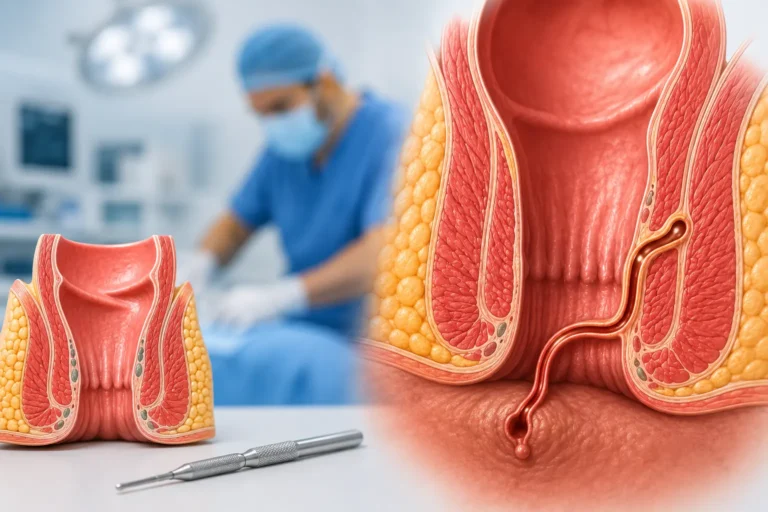
An anal fistula is an abnormal tunnel or connection that develops between the inside of the anal canal or rectum and the skin around the anus. It most commonly develops after an infection in an anal gland causes an abscess, which may drain but leave behind a persistent tract. An anal fistula can cause ongoing discomfort, irritation, drainage, and recurrent infections. Although it is not usually life-threatening, it generally does not heal on its own and may require medical or surgical treatment. Early evaluation by an experienced doctor can help determine the most appropriate treatment while protecting normal bowel function.
Anal fistulas most frequently occur following an anal abscess. When an infected anal gland becomes blocked, pus can accumulate and form an abscess. If the abscess drains spontaneously or is treated, a small passage may remain between the infected area and the skin, eventually developing into a fistula. Other possible causes include Crohn’s disease and other inflammatory bowel conditions, previous anorectal surgery or injury, tuberculosis, and certain less common infections. Identifying the underlying cause is important because it can influence both treatment and the likelihood of recurrence.
The symptoms of an anal fistula can vary depending on the location and complexity of the tract. Common symptoms include persistent or intermittent pain around the anus, swelling, redness, skin irritation, and drainage of pus, blood, or fluid from a small opening near the anus. Some patients experience recurrent anal abscesses, discomfort while sitting or during bowel movements, or itching around the affected area. Symptoms may temporarily improve when an abscess drains but can return if the fistula remains untreated.
Diagnosis usually begins with a detailed medical history and a physical examination of the anal and surrounding area. The doctor may look for an external opening, tenderness, swelling, or signs of infection and may gently examine the anal canal when appropriate. For complex or recurrent fistulas, imaging such as magnetic resonance imaging (MRI) or endoanal ultrasound may be recommended to identify the exact course of the fistula and its relationship with the anal sphincter muscles. In selected cases, an examination under anaesthesia may provide additional information and help plan treatment safely.
Treatment for an anal fistula depends on its location, complexity, involvement of the anal sphincter, underlying cause, and the patient’s overall health. Simple fistulas may often be treated with a surgical procedure called fistulotomy, in which the fistula tract is opened so that it can heal from the inside outward. When the fistula passes through a significant portion of the sphincter muscles, sphincter-preserving procedures may be considered to reduce the risk of bowel-control problems. These may include seton placement, advancement flap procedures, or other minimally invasive techniques selected according to the individual case. If an active abscess is present, drainage of the infection is an important part of treatment. Patients with an underlying condition such as Crohn’s disease may also require specialised medical treatment to control the underlying inflammation.
Following treatment, careful wound care and good hygiene are important for comfortable and effective healing. Patients may be advised to keep the area clean, take prescribed medicines as directed, and use warm sitz baths when recommended. Maintaining soft, regular bowel movements through adequate fluids, fibre, and any doctor-recommended stool-softening measures can help reduce discomfort and straining. Physical activity and return to work should follow the doctor’s advice, particularly after surgery. Follow-up appointments are important to monitor healing and identify any signs of persistent or recurrent infection.
If an anal fistula remains untreated, it can lead to repeated abscess formation, persistent discharge, increasing discomfort, and irritation of the surrounding skin. Complex fistulas may be more difficult to treat and can have a higher risk of recurrence. Treatment itself also carries potential risks, which vary according to the procedure and individual circumstances. These may include bleeding, infection, delayed wound healing, recurrence, or, in some cases, changes in bowel control if the sphincter muscles are significantly affected. Careful diagnosis and selection of an appropriate treatment approach are therefore essential.
Persistent pain, swelling, pus or blood discharge around the anus, a recurring lump, or an opening that repeatedly drains should be evaluated by a qualified doctor. Prompt medical attention is particularly important if symptoms are accompanied by fever, severe pain, rapidly increasing swelling, or difficulty passing stool. An early assessment can help distinguish an anal fistula from other anorectal conditions and allow appropriate treatment before recurrent infection or complications develop. If you experience ongoing symptoms around the anal area, consulting a specialist can provide a clear diagnosis and personalised treatment plan.
Mon - Sat : 9:00 AM - 6:00 PM Sunday : By Appointment Only
Expert Surgical Care
for a Healthier Tomorrow
Copyright © 2026 drshashanksurgeon.com
All Right Reserved
Powered by Prigmasoft Technologies
www.prigmasoft.world
WhatsApp us