By Dr. Shashank, MS (General Surgery), FALS, FLHS – General & Laparoscopic Surgeon, Himagiri Hospitals, Gachibowli, Hyderabad
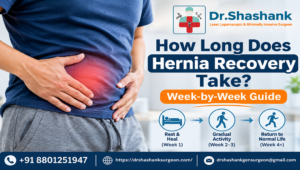
Most patients ask the same question before an operation: “How soon will I feel normal again?” Knowing what to expect each week makes recovery less stressful and helps you avoid mistakes that can slow healing. This guide walks through a typical recovery timeline, what is normal, what is not, and how to protect your repair. Timelines vary with the type of hernia, the technique used and your general health, so always follow your own surgeon’s instructions.
The First 24 to 48 Hours
After hernia surgery, you will be monitored until you are awake, comfortable, and able to walk a few steps. Many patients, especially after laparoscopic (key-hole) repair, go home the same day or after a short stay.
What is common in this period:
- Mild to moderate pain or soreness around the incisions, managed with prescribed medicines
- Some swelling or bruising near the wound or groin
- Tiredness or mild nausea from anaesthesia
- Shoulder-tip discomfort after key-hole surgery, caused by the gas used during the procedure, which settles within a day or two
Walk gently inside your home as advised. Light movement supports circulation and reduces the risk of complications.
Week 1: Rest, Walk and Protect the Repair
This is the most important week for comfort and wound care.
- Walk short distances several times a day. Do not stay in bed all day, and do not push yourself.
- Keep the wound clean and dry and follow dressing instructions exactly.
- Avoid lifting anything heavy, including children, full water cans and grocery bags.
- Support the area when you cough, sneeze or laugh, using a small pillow or your hand.
- Prevent constipation. Straining puts pressure on the repair. Drink plenty of water, eat fibre-rich food and use stool softeners if your surgeon advises.
Many people with desk-based jobs feel ready to resume light work from home within several days to a week, though this depends on the surgery and how you feel.
Weeks 2 to 4: Gradually Getting Back to Routine
By now, pain usually reduces and daily activities become easier. Bruising fades and the swelling around the wound slowly settles. A small firm ridge along the incision is common and softens over time.
During this stage:
- Continue walking and slowly increase your distance
- Resume light household tasks and office work if cleared
- Keep avoiding heavy lifting, intense gym workouts and sudden straining
- Attend your follow-up visit so the surgeon can check the wound and your healing
Driving is usually restarted once you can move, brake and turn without pain or hesitation, and are no longer taking sedating pain medicines. Ask your surgeon before you begin.
Weeks 4 to 8: Returning to Exercise and Heavy Activity
Most patients are advised to avoid heavy lifting and strenuous exercise for several weeks, and the exact period depends on the hernia size, type and repair. Your surgeon will tell you when you can restart weight training, running, cycling or physically demanding work.
When you return, start slowly, with lighter weights and fewer repetitions, and build up gradually. Strengthening your core gently and maintaining a healthy weight reduces strain on the repaired area over the long term.
Foods That Help Healing
You do not need a special diet, but a few habits make recovery smoother:
- Protein (dal, eggs, curd, paneer, chicken, fish) supports tissue repair
- Fibre (fruits, vegetables, whole grains) prevents constipation
- Plenty of fluids keep digestion regular and the body hydrated
- Smaller, lighter meals if you feel nauseous at first
Limit smoking and alcohol, as smoking in particular can slow wound healing and raise the chance of the hernia returning.
Warning Signs After Surgery: When to Call Your Surgeon
Contact your surgeon or visit the nearest hospital without delay if you notice:
- Fever or chills
- Increasing redness, warmth, swelling or pus at the wound
- Pain that is getting worse rather than better
- Persistent vomiting or a swollen abdomen
- Difficulty passing urine, stool or gas
- A new bulge at or near the operated site
- Sudden swelling in the groin or scrotum
Mild soreness is expected, but worsening symptoms should always be checked.
How to Reduce the Chance of a Hernia Coming Back
A well-performed repair gives long-lasting results, and you can protect it by:
- Following the lifting and activity restrictions you were given
- Managing chronic cough and constipation
- Maintaining a healthy weight
- Stopping smoking
- Strengthening your core gradually once cleared
Choosing Your Surgeon: Why Follow-Up Matters
Recovery does not end when you leave the operating theatre. When looking for the best hernia surgeon in Gachibowli, consider who will guide you through the weeks after surgery as well. A good surgeon will explain the procedure and recovery in plain language, be reachable if you have concerns, and schedule proper follow-up visits. Hospital location also matters, because you may need to return for dressing checks or an urgent review.
Hernia Surgery in Gachibowli with Dr. Shashank
Dr. Shashank is a general and laparoscopic surgeon with over a decade of experience in laser, laparoscopic, and minimally invasive key-hole surgery. For hernia surgery in Gachibowli, consultations and procedures are available at Himagiri Hospitals, Old Mumbai Highway, Indira Nagar, Gachibowli, Hyderabad – 500032. Each patient receives an individual plan covering diagnosis, the right surgical technique, post-operative care, and follow-up.
To learn about the procedure itself, visit our hernia surgery page, or explore our laparoscopic surgery and other surgeries.
Frequently Asked Questions
Q1. How long does it take to recover after a hernia operation?
A: It varies. Many people return to light activity within days and to most routine activities within a few weeks, while heavy lifting and strenuous exercise are delayed longer. Your surgeon will give a timeline for your case.
Q2. When can I go back to work?
A: Desk work is often possible within several days to about a week, while physically demanding jobs need more time. Always get your surgeon’s approval first.
Q3. Is it normal to have swelling or bruising after surgery?
A: Mild swelling and bruising near the wound or groin are common and usually settle over a few weeks. Increasing swelling, severe pain or fever should be checked.
Q4. Can I exercise after hernia surgery?
A: Gentle walking is encouraged from the start. Strenuous exercise and weight training should wait until your surgeon clears you.
Q5. Can a hernia come back after repair?
A: Recurrence is uncommon after a well-planned repair, but it can happen, especially with heavy straining, smoking or poor wound healing. Following post-operative advice lowers the risk.
Book a Consultation
If you have a hernia and want to understand your options and recovery, call or WhatsApp +91 8801251947 to book a consultation with Dr. Shashank at Himagiri Hospitals, Gachibowli.
This article is for general education only and is not a substitute for professional medical advice, diagnosis or treatment. Recovery timelines vary, and treatment recommendations depend on individual evaluation and clinical assessment.