
Talk to our team and get expert guidance for your surgical needs.
+91 88012 51947 Book a Consultation →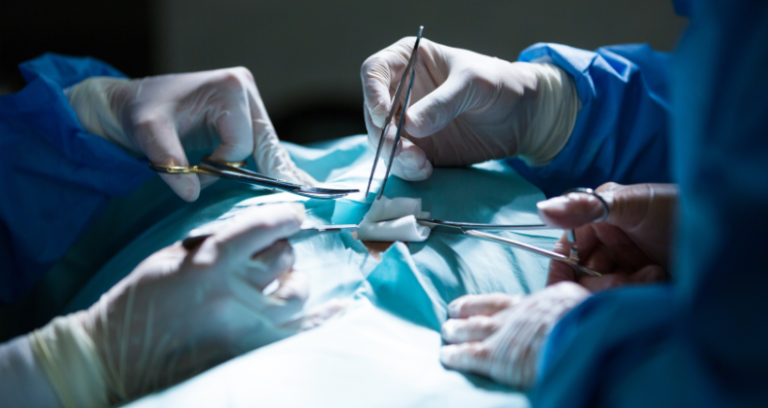
| Hernia type | Where it appears | Common signs |
|---|---|---|
| Inguinal hernia | Groin | Bulge or ache in the groin, worse on coughing or lifting |
| Umbilical hernia | Around the belly button | Bulge near the navel; common after pregnancy or with obesity |
| Incisional hernia | Near a previous surgical scar | Swelling along the scar after abdominal surgery |
| Femoral hernia | Upper thigh or groin | Small, painful lump; more common in women |
| Hiatal hernia | Upper stomach pushing into the chest | Heartburn, acid reflux, difficulty swallowing |
| Ventral / epigastric hernia | Front of the abdominal wall | Bulge in the midline above the navel |
A hernia develops when pressure inside the abdomen meets a weak area in the muscle wall. Common causes and risk factors include:
Surgery is the definitive treatment for most hernias. Most repairs use surgical mesh to strengthen the weak area and reduce the chance of recurrence.
Laparoscopic (keyhole) hernia surgery: performed through a few small incisions using a camera and fine instruments. It generally means less pain, smaller scars and a faster return to routine. See our Laparoscopic Surgery page.
Open hernia repair: a single, larger incision over the hernia. It may be preferred for some large, complex or recurrent hernias.
| Laparoscopic | Open | |
|---|---|---|
| Incision | Several small cuts | One larger cut |
| Post-operative pain | Generally less | Generally more |
| Recovery | Often faster | Often slower |
| Scarring | Minimal | More visible |
| Best suited for | Many inguinal, ventral and bilateral hernias | Some large, complex or recurrent hernias |
Neither technique is best for everyone. Dr. Shashank recommends the right approach after examining you and explains the alternatives.
Hernia surgery is commonly performed and generally safe, but like any surgery it carries some risks, including pain, swelling, bruising, bleeding, infection and fluid collection (seroma). Less commonly, the hernia can recur or there may be ongoing discomfort. Your surgeon will explain the risks specific to your case. Contact your doctor promptly if you develop fever, increasing pain or swelling, pus, or significant bleeding.
Dr. Shashank Deshmukh, MS, FALS, FLHS, Laparoscopic and General Surgeon, Himagiri Hospital, Gachibowli
Dr. Shashank Deshmukh has13years of experience in general and laparoscopic surgery, with a focus on minimally invasive hernia repair.
The right surgeon is one with specific experience in hernia repair who explains your options clearly. Dr. Shashank is a laparoscopic and general surgeon at Himagiri Hospital, Gachibowli, who treats inguinal, umbilical, incisional and hiatal hernias. Book a consultation to discuss your case.
Hernia surgery with Dr. Shashank is performed at Himagiri Hospital, Indira Nagar, Gachibowli, Hyderabad 500032. Call +91 88012 51947.
No. A hernia does not heal by itself. Supportive measures may ease symptoms for a while, but surgery is the definitive treatment.
Laparoscopic surgery usually means smaller cuts, less pain and a faster recovery, but open repair is better for some hernias. The best option depends on the hernia and your health.
Many patients return to light activity within days and desk work within one to two weeks, while heavy lifting is restricted for several weeks. Your surgeon will give you a timeline for your case.
Recurrence is possible, but mesh repair and careful technique lower the risk. Avoiding heavy straining and treating chronic cough or constipation also help.
It may grow larger and more painful. In some cases the intestine can become trapped or lose its blood supply (strangulation), which is a medical emergency.
Mon - Sat : 9:00 AM - 6:00 PM Sunday : By Appointment Only
Expert Surgical Care
for a Healthier Tomorrow
Copyright © 2026 drshashanksurgeon.com
All Right Reserved
Powered by Prigmasoft Technologies
www.prigmasoft.world
WhatsApp us