
Talk to our team and get expert guidance for your surgical needs.
+91 88012 51947 Book a Consultation →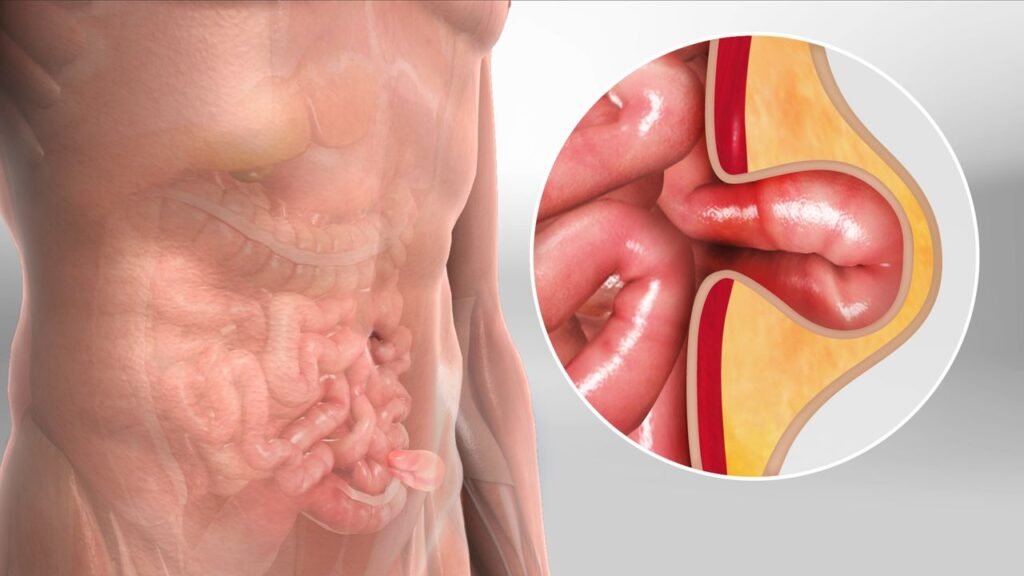
A hernia occurs when an internal organ or tissue pushes through a weakened area of the surrounding muscle or abdominal wall. It commonly develops in the groin, abdomen, or around a previous surgical site. Hernia surgery is performed to repair the weakened area and prevent the hernia from becoming larger or causing complications. Laparoscopic and minimally invasive key-hole techniques can offer smaller incisions, less postoperative discomfort, and faster recovery in suitable patients.
Hernias may develop due to weakness in the abdominal muscles combined with increased pressure inside the abdomen. Common contributing factors include heavy lifting, chronic coughing, constipation, obesity, pregnancy, ageing, and previous abdominal surgery. Some hernias may also result from a natural weakness present from birth.
The most common sign is a visible or noticeable swelling or bulge that may become more prominent while standing, coughing, or straining. Patients may experience pain, discomfort, heaviness, or a pulling sensation around the affected area. Some hernias may initially cause no symptoms but can gradually increase in size over time.
Hernia diagnosis usually begins with a detailed medical history and physical examination. The surgeon may assess the swelling while the patient stands, coughs, or strains. Ultrasound or CT imaging may be recommended when the diagnosis is uncertain or when a more detailed assessment is required for surgical planning.
Small, symptom-free hernias may sometimes be monitored based on the surgeon’s assessment. However, symptomatic, enlarging, or complicated hernias generally require surgical repair. Depending on the type and size of the hernia, laparoscopic or minimally invasive key-hole surgery may be recommended, using small incisions and mesh reinforcement to strengthen the abdominal wall. Open surgery may be appropriate in certain cases.
After hernia surgery, patients are usually advised to gradually return to normal activities while avoiding strenuous exercise and heavy lifting until adequate healing has occurred. Keeping the surgical wounds clean, following prescribed medications, maintaining a healthy diet, and attending follow-up appointments can support a smooth recovery.
Hernia surgery is generally safe when performed by an experienced surgeon, but potential complications can include infection, bleeding, swelling, pain, fluid collection, or recurrence of the hernia. Rarely, complications involving surrounding tissues or organs may occur. Your surgeon will discuss the potential risks based on your individual condition and surgical approach.
A doctor should be consulted if you notice a new or increasing abdominal or groin swelling, persistent pain, or discomfort associated with a hernia. Sudden severe pain, vomiting, abdominal swelling, or a hernia that becomes firm and cannot be pushed back may indicate an emergency and requires immediate medical attention.
Mon - Sat : 9:00 AM - 6:00 PM Sunday : By Appointment Only
Expert Surgical Care
for a Healthier Tomorrow
Copyright © 2026 drshashanksurgeon.com
All Right Reserved
Powered by Prigmasoft Technologies
www.prigmasoft.world
WhatsApp us