
Talk to our team and get expert guidance for your surgical needs.
+91 88012 51947 Book a Consultation →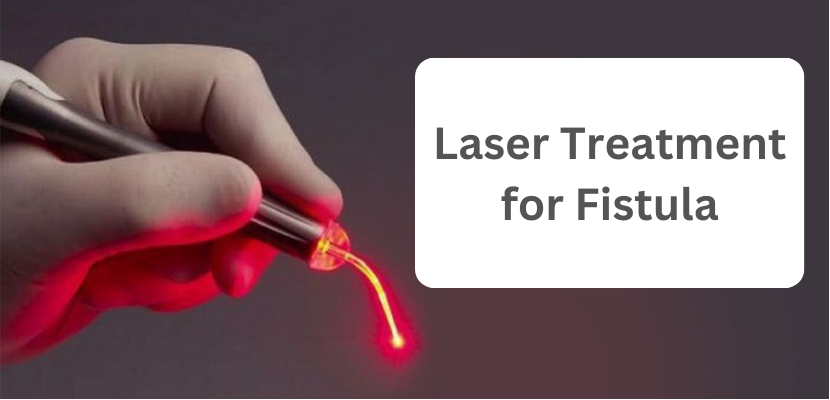
Laser Fistula Surgery is a modern, minimally invasive treatment for anal fistula, a condition in which an abnormal tract develops between the anal canal and the surrounding skin. The procedure uses precise laser energy to treat the fistula tract while aiming to preserve the surrounding anal sphincter muscles. It can offer less tissue damage, reduced postoperative discomfort and a quicker recovery compared with some conventional procedures.
An anal fistula commonly develops following an untreated or recurrent anal abscess. Infection of the anal glands can lead to pus formation, and when the abscess drains but the tract does not heal completely, a fistula may develop. Other conditions such as Crohn’s disease and recurrent anorectal infections may also contribute to fistula formation.
Common symptoms include persistent or recurrent pain around the anus, swelling, irritation and discharge of pus or blood from a small opening near the anus. Some patients may experience repeated abscesses, skin irritation or discomfort while sitting or during bowel movements.
Diagnosis usually begins with a detailed medical history and physical examination. Depending on the location and complexity of the fistula, the surgeon may recommend investigations such as MRI of the pelvis or other imaging studies to accurately identify the fistula tract and plan the most appropriate treatment.
Treatment depends on the fistula’s location, complexity and involvement of the sphincter muscles. Laser Fistula Surgery, also known as FiLaC, is a minimally invasive option that uses controlled laser energy to close and heal the fistula tract. In selected cases, other procedures such as fistulotomy, seton placement or sphincter-preserving techniques may be recommended based on individual requirements.
After Laser Fistula Surgery, patients are generally advised to maintain good perianal hygiene, follow prescribed medications and keep the bowel movements soft with adequate fluids and fibre. Regular follow-up helps monitor healing and allows the surgeon to identify any signs of recurrence at an early stage.
Although Laser Fistula Surgery is designed to minimise tissue trauma and protect sphincter function, complications can occasionally occur. These may include infection, bleeding, delayed healing, persistent discharge or recurrence of the fistula. The risk depends on the complexity and location of the fistula and the individual patient’s healing response.
Persistent anal pain, swelling, pus discharge, recurrent abscesses or a non-healing opening near the anus should not be ignored. Early evaluation by an experienced colorectal or minimally invasive surgeon can help identify the condition and determine whether Laser Fistula Surgery or another treatment approach is appropriate.
Mon - Sat : 9:00 AM - 6:00 PM Sunday : By Appointment Only
Expert Surgical Care
for a Healthier Tomorrow
Copyright © 2026 drshashanksurgeon.com
All Right Reserved
Powered by Prigmasoft Technologies
www.prigmasoft.world
WhatsApp us