
Talk to our team and get expert guidance for your surgical needs.
+91 88012 51947 Book a Consultation →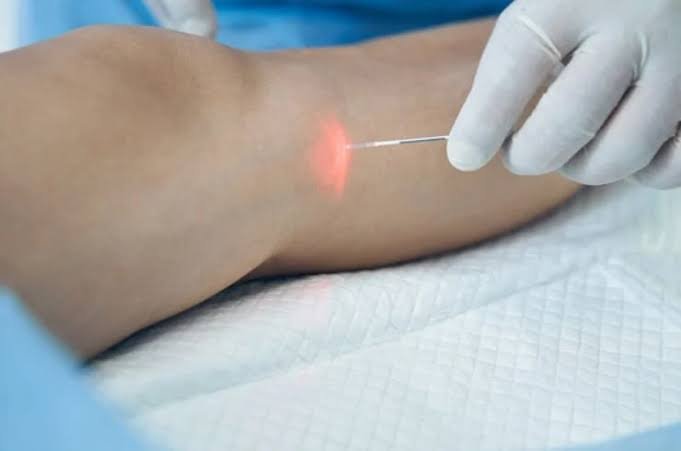
Varicose veins are enlarged, twisted veins that commonly develop in the legs when blood does not flow efficiently back toward the heart. Varicose vein laser treatment, also known as endovenous laser treatment (EVLT) or endovenous laser ablation, is a minimally invasive procedure used to treat problematic veins. The treatment uses controlled laser energy to close the affected vein, allowing blood to naturally reroute through healthier veins. It is generally performed as an outpatient procedure and can provide effective relief from symptoms while improving the appearance of prominent veins.
Varicose veins usually develop when the small valves inside the veins become weak or damaged. These valves normally help keep blood moving in one direction toward the heart. When they do not function properly, blood can collect within the vein, increasing pressure and causing the vein to become enlarged and twisted. Age, family history, prolonged standing or sitting, pregnancy, excess body weight, and reduced physical activity can increase the likelihood of developing varicose veins. In some individuals, the condition may gradually worsen over time if the underlying venous insufficiency is not addressed.
The appearance of bulging, blue or purple veins is one of the most noticeable signs of varicose veins. Some patients may also experience aching, heaviness, throbbing, burning, itching, or discomfort in the legs, particularly after prolonged standing. Swelling around the ankles and lower legs, muscle cramps, and tiredness in the legs may also occur. In more advanced cases, changes in skin colour or texture and sores near the affected veins can develop. Not every person with varicose veins experiences significant symptoms, but persistent or worsening discomfort should be medically evaluated.
Diagnosis begins with a detailed medical history and physical examination of the legs. A doctor may assess the appearance of the veins, swelling, skin changes, and symptoms that occur during standing or physical activity. Venous Doppler ultrasound is commonly used to examine blood flow and identify faulty valves, blood reflux, and the veins responsible for the problem. This evaluation helps determine whether laser treatment is appropriate and allows the treatment plan to be tailored to the patient’s individual venous condition.
The appropriate treatment depends on the severity of the varicose veins, the underlying cause, and the patient’s overall health. Conservative measures such as regular physical activity, weight management, leg elevation, and compression stockings may help control symptoms in selected patients. When an incompetent vein requires intervention, varicose vein laser treatment can be considered. During endovenous laser ablation, a thin catheter is guided into the affected vein under ultrasound guidance, and laser energy is used to seal the vein. Blood is then redirected through healthier veins. Depending on the individual case, other minimally invasive procedures such as radiofrequency ablation, sclerotherapy, or specialised treatment for smaller surface veins may also be recommended.
Most patients can return to light daily activities relatively soon after laser treatment, although the exact recovery period varies. Walking regularly as advised by the doctor can support healthy circulation and recovery. Compression stockings may be recommended for a specified period depending on the treatment and individual circumstances. Patients should follow instructions regarding exercise, prolonged standing, bathing, medications, and follow-up appointments. Mild bruising, tenderness, tightness, or discomfort along the treated vein can occur temporarily and generally improves as healing progresses.
Varicose vein laser treatment is generally considered safe when performed after appropriate evaluation and by an experienced medical professional. As with any medical procedure, however, there can be potential risks. Temporary bruising, swelling, tenderness, skin irritation, or changes in sensation may occur around the treatment area. Less commonly, complications such as infection, nerve irritation, blood clots, skin burns, or recurrence of varicose veins may occur. A thorough pre-treatment assessment and appropriate follow-up help minimise these risks and support a safe recovery.
Patients should consider consulting a doctor if varicose veins are becoming painful, increasingly prominent, or associated with swelling, heaviness, skin changes, or persistent discomfort. Medical evaluation is particularly important if a vein becomes suddenly painful, red, warm, or swollen, or if a leg develops sudden significant swelling. Early assessment can identify underlying venous insufficiency and help determine whether conservative management or a procedure such as laser treatment for varicose veins is appropriate. Seeking timely care can also help prevent progression and address symptoms before they become more difficult to manage.
Mon - Sat : 9:00 AM - 6:00 PM Sunday : By Appointment Only
Expert Surgical Care
for a Healthier Tomorrow
Copyright © 2026 drshashanksurgeon.com
All Right Reserved
Powered by Prigmasoft Technologies
www.prigmasoft.world
WhatsApp us