
Talk to our team and get expert guidance for your surgical needs.
+91 88012 51947 Book a Consultation →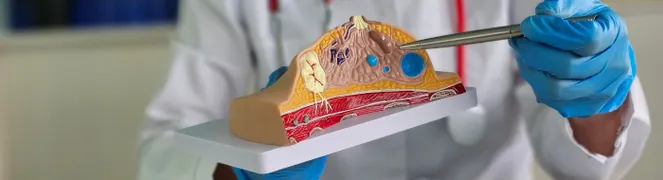
Fibroadenoma is a common non-cancerous (benign) breast lump that primarily affects women, particularly those in their reproductive years. It develops from the glandular and connective tissues of the breast and typically feels like a smooth, firm, round lump that can move easily under the skin. Although fibroadenomas are generally harmless and do not usually increase the risk of breast cancer significantly, any new breast lump should be properly evaluated by a medical professional.
Fibroadenoma surgery is a procedure performed to remove the lump while preserving as much healthy breast tissue as possible. The treatment approach depends on the size, location, growth pattern, and symptoms associated with the lump. With modern surgical techniques and minimally invasive approaches, fibroadenoma removal can be performed with careful attention to cosmetic appearance, patient comfort, and recovery.
The exact cause of fibroadenoma is not fully understood, but hormonal influences, particularly sensitivity to estrogen, are believed to play an important role in its development. These breast lumps are more commonly seen in younger women and may develop or change in size during periods of hormonal fluctuation, such as pregnancy, breastfeeding, or certain phases of the menstrual cycle.
Genetic factors and individual hormonal responses may also contribute to the development of fibroadenomas. Some lumps remain unchanged for years, while others may gradually increase or decrease in size. Although fibroadenomas are not caused by injury, infection, or lifestyle habits, regular breast examinations help identify any unusual changes at an early stage.
The most common symptom of fibroadenoma is a painless breast lump that feels firm, smooth, and well-defined. It is usually round or oval in shape and can move slightly when touched. Fibroadenomas may occur in one or both breasts and can vary in size, ranging from very small lumps to larger masses that are more noticeable.
Some women may experience mild breast tenderness or discomfort, particularly around their menstrual periods. Larger fibroadenomas can sometimes cause visible changes in breast shape or create a feeling of heaviness. Although most fibroadenomas do not cause serious symptoms, any lump that grows rapidly, becomes painful, changes in texture, or is associated with nipple discharge or skin changes should be evaluated by a specialist.
Accurate diagnosis of fibroadenoma is essential to distinguish it from other types of breast lumps and determine the most appropriate treatment. The evaluation generally begins with a detailed medical history and clinical breast examination, during which the surgeon assesses the lump’s size, shape, consistency, mobility, and location.
Breast ultrasound is commonly recommended, especially for younger women, to examine the structure and characteristics of the lump. Depending on the patient’s age and clinical findings, mammography may also be advised. In certain cases, a core needle biopsy is performed to collect a small tissue sample for laboratory examination and confirm that the lump is benign. These investigations help the surgeon determine whether monitoring or surgical removal is the most suitable approach.
Treatment for fibroadenoma depends on the size of the lump, its growth pattern, diagnostic findings, and the patient’s symptoms and preferences. Small, stable fibroadenomas with reassuring imaging and biopsy results may not require surgery and can often be managed through regular clinical examinations and imaging follow-ups. This approach helps monitor the lump for any changes over time.
Surgical removal may be recommended when the fibroadenoma is large, growing rapidly, causing discomfort, affecting breast appearance, or showing uncertain findings on diagnostic tests. Fibroadenoma surgery, also known as excisional biopsy or lumpectomy, involves removing the lump while preserving surrounding healthy breast tissue. The procedure is generally performed under appropriate anaesthesia, with the surgical technique selected according to the lump’s size and location. Minimally invasive surgical approaches and carefully placed incisions may help reduce visible scarring and support better cosmetic outcomes in suitable patients.
Proper post-operative care plays an important role in ensuring smooth recovery after fibroadenoma surgery. Patients are generally advised to take prescribed medications, keep the incision area clean and dry, and follow the surgeon’s instructions regarding dressing changes and wound care. Mild swelling, bruising, tenderness, or discomfort around the operated area may occur during the initial recovery period and usually improves gradually.
Patients should avoid strenuous physical activities, heavy lifting, and excessive upper-body movements until advised by their surgeon. Wearing a supportive, comfortable bra may help reduce discomfort and provide additional support during healing. Follow-up appointments are important to monitor wound recovery and review the biopsy or histopathology report to confirm the nature of the removed lump.
Fibroadenoma surgery is generally considered a safe procedure when performed by an experienced surgeon. However, as with any surgical intervention, certain risks may occur. These can include temporary pain, swelling, bruising, bleeding, infection, or fluid accumulation around the operated area. Some patients may also experience changes in breast sensation or temporary tenderness during the healing process.
Depending on the size and location of the lump, surgery may occasionally result in a visible scar, minor changes in breast contour, or asymmetry. Although uncommon, complications may require additional medical attention or treatment. A detailed pre-operative assessment and appropriate surgical planning help minimise these risks and improve the overall outcome.
Women should consult a qualified breast surgeon or general surgeon if they notice a new lump in the breast, even if it is painless or feels harmless. Medical evaluation is particularly important if an existing lump increases in size, becomes painful, feels harder or irregular, or is accompanied by nipple discharge, skin dimpling, redness, or changes in breast shape.
Early consultation helps identify the nature of the lump and determine whether observation, further investigations, or fibroadenoma surgery is necessary. If you have been diagnosed with fibroadenoma or are experiencing unusual breast changes, consulting Dr. Shashank can help you understand the available treatment options and receive an appropriate, personalised treatment plan.
Mon - Sat : 9:00 AM - 6:00 PM Sunday : By Appointment Only
Expert Surgical Care
for a Healthier Tomorrow
Copyright © 2026 drshashanksurgeon.com
All Right Reserved
Powered by Prigmasoft Technologies
www.prigmasoft.world
WhatsApp us